.png?width=200&height=59&name=IPTellogo-byline-2020-dark-v2-pnd-optimised-500%20(1).png "IPTellogo-byline-2020-dark-v2-pnd-optimised-500 (1)")
Cisco Catalyst Center (formerly Cisco DNA Center) is the platform Cisco is betting on to run enterprise networks. In this blog, we'll explain the three A's of Catalyst Center — Assurance, Automation and Access to third-party systems — and what each one means for the team running your network.
Catalyst Center: What Is It and Why Does It Matter?
 Cisco Catalyst Center is the management and automation platform for Cisco enterprise networks. It was formerly known as Cisco DNA Center, where DNA stood for Digital Network Architecture. It brings data from switches, routers, wireless controllers and access points into one dashboard, so you can monitor, configure and troubleshoot from one place.
Cisco software hasn't always had a brilliant reputation (looking at you here, CiscoWorks), so a mixed reaction is understandable. For a long time, the element manager for Cisco networks was Cisco Prime Infrastructure. Catalyst Center is its successor.
It does take a lot of horsepower. The payoff is a far broader view than the command line gives you: network telemetry streamed into one pane of glass, with the platform drawing out the themes for you.
We think of it as three A's: Assurance (monitoring the network), Automation (configuring it) and Access to third-party systems (integration). If you're moving from Cisco Prime, our Cisco Catalyst Center Overview covers the migration.
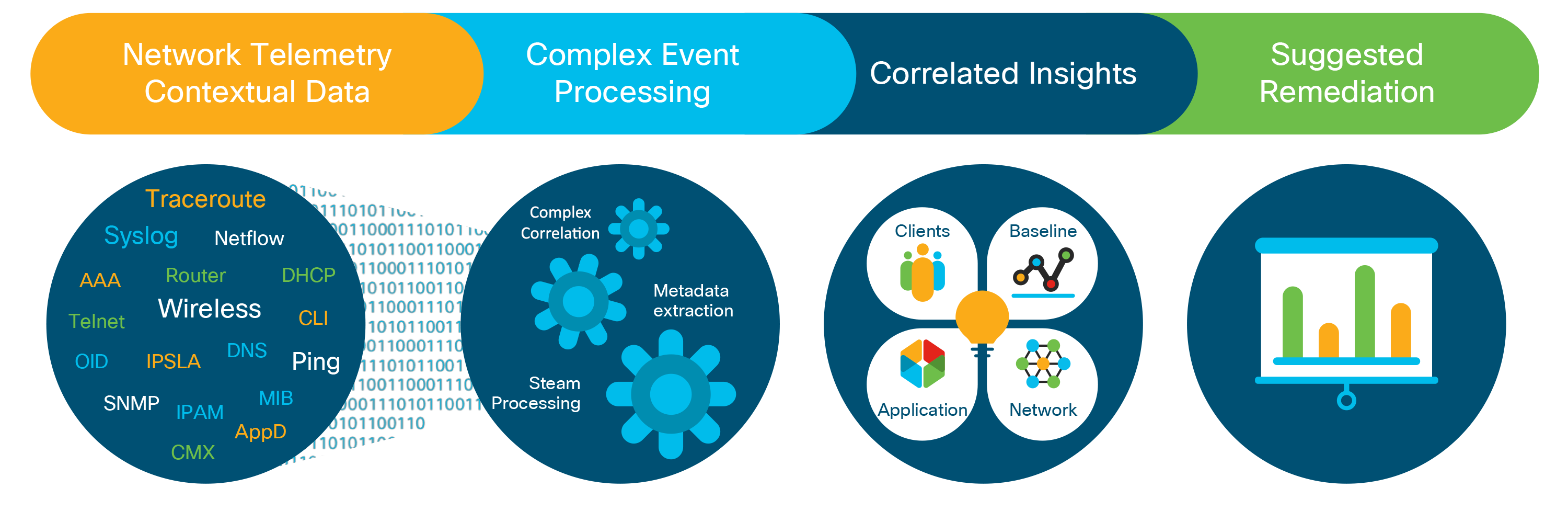
The graphic below sums up the platform's main capabilities.
Assurance: How Does Catalyst Center Monitor Your Network?
Assurance is how Catalyst Center monitors and troubleshoots your network in real time. Rather than relying only on polling devices and waiting for syslog messages, it adds a continuous stream of telemetry from the network. It uses that data to score network and client health and point you at the likely cause of a problem.
The platform simply has a whole lot more data at its disposal, and that makes for a better management experience.
Troubleshooting is one area where Catalyst Center excels. Wireless sensors, Intelligent Capture and Client 360 add a wealth of tools. Intelligent Capture can grab packets from a wireless client at the moment an issue occurs (wouldn't that make life easier when you're submitting data on a TAC case?).
For the detail, see Cisco Catalyst Center Assurance.
Automation: How Does Catalyst Center Configure Your Network?
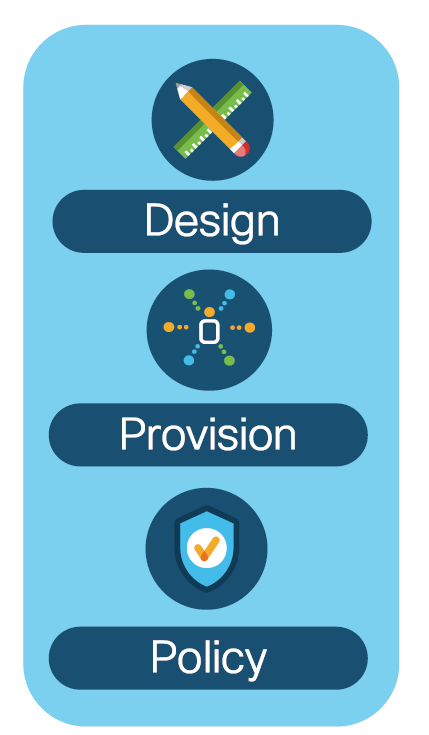 Automation is where Catalyst Center configures the network for you. New devices are provisioned with zero-touch Plug and Play, software images and configuration are rolled out consistently, and in a Software-Defined Access (SD-Access) fabric, Catalyst Center builds the network and applies access policy from one place.
Once you've got your head around AI-driven assurance, configuration is the next step, and this is where things get more interesting. SD-Access is Cisco's software-defined networking (SDN) approach for the campus.
In an SD-Access fabric, access is driven by group-based policy. Devices and users are placed into Scalable Groups, usually by Cisco ISE when they authenticate, and access contracts set what each group can reach. Instead of allocating devices to VLANs switch by switch, you set the policy once and the network applies it wherever the device connects.
Catalyst Center Automation does more besides. Plug and Play (PnP) gives zero-touch provisioning of new switches, routers and access points. Configuration templates push consistent configuration to groups of devices. LAN Automation builds the underlay network for SD-Access.
SWIM: Software Image Management
One feature worth calling out is Software Image Management (SWIM). You set your "golden image", and Catalyst Center checks which devices haven't been upgraded and rolls the image out to them.
Integration: How Does Catalyst Center Connect to Other Systems?
Catalyst Center connects to other systems through its APIs and built-in integrations, such as IT service management (ITSM) platforms. Pulling in data from several systems makes for smarter decisions, and it lets you automate: a network event can open a ticket, or another tool can request a change.
Integration, integration, integration. You're going to increasingly want your management system connected to the rest of your toolset.
If you want to auto-generate tickets based on a network event, you can connect to the API and do just that. There's a wealth of options, and Cisco's analytics build on the same data. See Cisco AI Analytics in Operation for how that works day to day.
SD-Access: What Comes After the Basics?
.png?width=173&height=173&name=Cisco%20SD%20Access_%20Scalable%20Group%20Tags%20(Instagram).png) Once Catalyst Center is running, the natural next step is Software-Defined Access. It offers a real step up in security through Scalable Group Tags and micro-segmentation, which underpin a zero trust approach to the campus network. Catalyst Center is the controller for the fabric, so the groundwork you've already done carries straight over.
Once Catalyst Center is running, the natural next step is Software-Defined Access. It offers a real step up in security through Scalable Group Tags and micro-segmentation, which underpin a zero trust approach to the campus network. Catalyst Center is the controller for the fabric, so the groundwork you've already done carries straight over.
Our guides to Scalable Group Tags and Micro Segmentation explain how the policy works, and our Zero Trust Architecture introduction covers the wider approach.
Also worth a look in the Cisco software family is Cisco Spaces, which provides location services on top of your wireless network. Start with our Cisco Spaces Introduction.
Catalyst Center: FAQs
What Is Cisco Catalyst Center?
Cisco Catalyst Center is Cisco's management, automation and assurance platform for enterprise networks. It monitors network and client health, automates provisioning and software upgrades, integrates with other systems through its APIs, and provides the policy engine for SD-Access.
Is Catalyst Center the Same as Cisco DNA Center?
Yes. Cisco renamed DNA Center to Catalyst Center. The product and its core capabilities carried over, so older material that refers to DNA Center still largely applies.
Do I Need SD-Access to Use Catalyst Center?
No. Assurance, Plug and Play, SWIM and configuration templates all work on a traditional network. SD-Access is an optional next step that adds group-based policy and segmentation once the platform is in place.
Does Catalyst Center Replace Cisco Prime Infrastructure?
Yes. Catalyst Center is the successor to Cisco Prime Infrastructure for managing Cisco enterprise networks. Our Catalyst Center Overview explains how to plan the move.
Catalyst Center: Summary
Cisco is betting a lot on Catalyst Center, and it promises something we've not had before: a network that can be managed and monitored in real time, where you spend less time on the command line and more on the user experience you want to offer. Faster fault finding and integration with third-party systems let you build your own automation, and SD-Access adds a real step up in security when you're ready. If you're not that adventurous, Catalyst Center simply makes your life easier — which, for most network admins, is a goal in itself.
Need Help With Cisco Catalyst Center?
Our Cisco Catalyst Center team can help you plan, deploy and get value from Catalyst Center and SD-Access. Our free Network Assessment gives you a quick health check on where your network stands. If that's useful, get in touch with the IPTel team or email sales@iptel.com.au.